Thursday, October 19, 2006
6:00 - 7:30 p.m.
Main Library - Latino/Hispanic Room - Lower Level
Please call the Project Read office @ 415.557.4388 if you plan to attend.
Project Read at The Bridge at Main is the adult literacy program of the San Francisco Public Library. We help English-speaking adults improve their basic reading and writing skills so they may access greater opportunities in their lives. This is a friendly internet site where adult learners can share what they have written as part of their tutoring sessions or on their own.
One excellent suggestion was to keep track of the basic skills that these work-related tasks involve and at some point sit down with the learner, look at the list, and prioritize which skills are most important to the learner and which ones he or she would like to start working on first. Then create a long-range plan to teach those skills and work through that plan at each tutoring session.
A tutor suggested this simple mental exercise that might help the learner understand the commitment needed to reach his or her personal goals. The suggestion was to ask the learner if she or he has ever decided to learn or accomplish something, worked hard at it, and ultimately been successful. This can include just about anything in life--learning to play an instrument, learning to fix a car engine, completing a rehab. program, etc. Then ask them to describe what they did to be successful--what commitment did they make, and how much time did they devote to reaching this goal? Then, the learner can think about applying the same time and commitment to the reading and writing goals that he or she has set.
One creative suggestion was to have the learner record himself as he tells a story, and then ask the learner to use the recording as a basis for completing a writing exercise. And don't forget to praise the learner for his excellent vocabulary and speaking skills. Spoken language, after all, is the starting point for all writing.
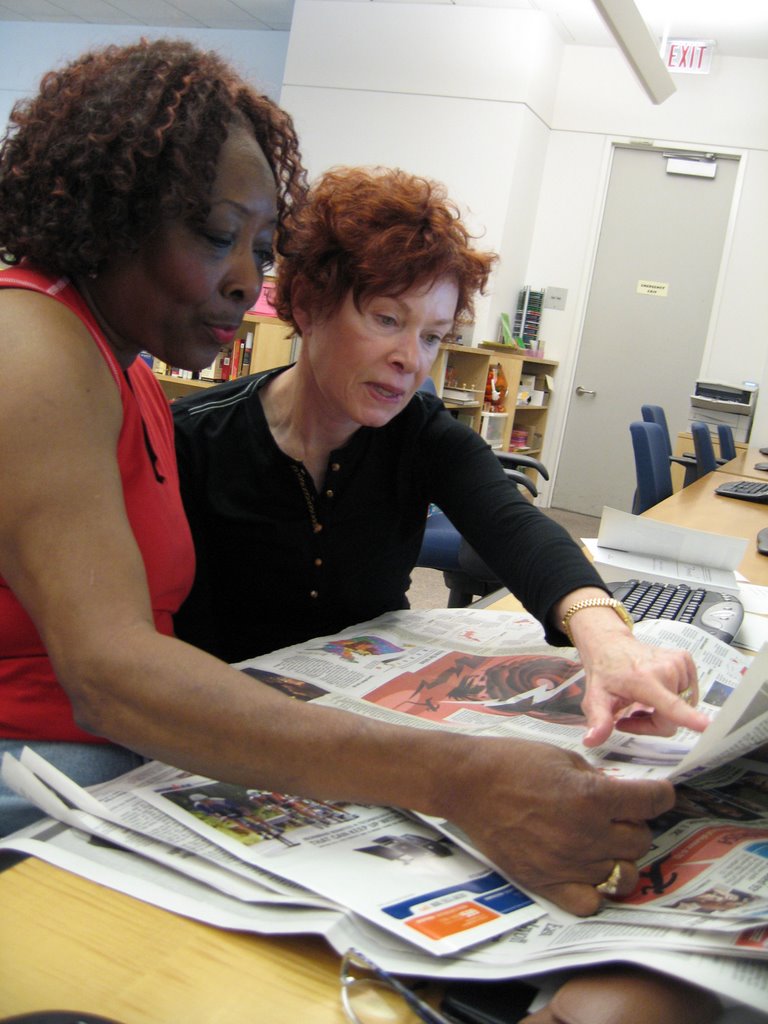
The September Round Table discussion was a great example of just how helpful and informative these sessions can be. Everyone attending offered their suggestions, based on their own tutoring experience, and helped their fellow tutors find new ways to address a variety of instructional challenges. So come by and join the discussion at one of these upcoming Tutor Round Tables -- October 3 and November 7 (6:00 PM in the Project Read Conference Room).


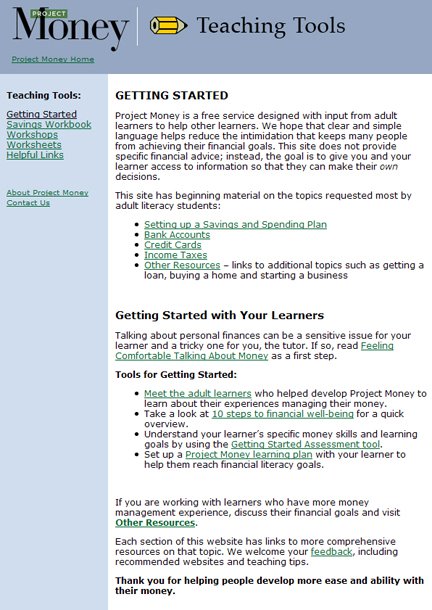
On Thursday, August 17, Project Read presented a continuing education workshop for volunteer tutors on the subject of helping adult learners achieve their financial literacy goals. This workshop focused on the learner-developed information (handbook and website) created by the Project Money team.
Highlights from the evening's workshop included:
A discussion of the barriers which prevent tutor-learner teams from working on financial goals. An excellent resource on this topic can be found on the Project Money website - www.projectmoney.org - in the Teaching Tools section. It's called "Feeling Comfortable Talking About Money" and it reviews reasons why adult learners may be sensitive about financial issues, and what tutors can do to make the learner feel safe in order to promote an open discussion of the topic. You can view this document at the following link: http://www.projectmoney.org/teaching/talking.html
We also discussed tools available on the website to help tutor-learner teams assess what the learner already knows about banking, credit, savings, etc., and what they need to learn: http://www.projectmoney.org/teaching/gettingstarted.doc (MS Word document) is a link to "Getting Started, a Self Assessment Tool". After working through this resource, you can go on to the next step of putting together a "Project Money Learning Plan": http://www.projectmoney.org/teaching/learningplan.doc (MS Word document).
Remember, the Project Money website has easy to understand information on many financial literacy topics. The information included on the site was researched and edited by adult learners themselves with the expert assistance of community advisors from financial institutions as well as volunteer tutors who then road- tested the instructional material.
One suggestion offered involved using the technique of DUET READING to help the learner understand how punctuation is used to add meaning to any style of writing. As you recall in duet reading the tutor and learner read a text simultaneously. In this way, the learner can begin to hear how punctuation influences the flow of reading and the meaning of what is being read.
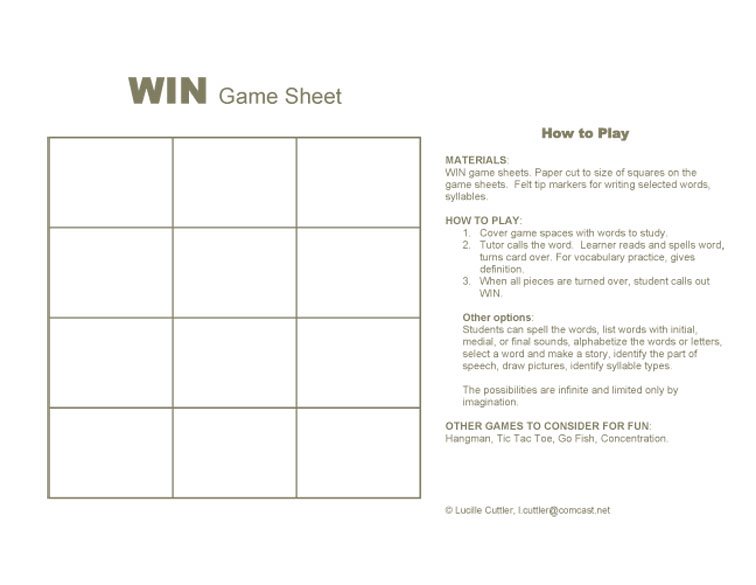
To help beginning writers understand the nuances of grammar and punctuation we have handy FREE books available in the Project Read office. Two that might be hepful are: Punctuation Power: Punctuation and How to Use it, and Write All About It.
Here are some tips that came out of that meeting.

This is a blog for Project Read. We are a free service of the San Francisco Public Library. We train volunteers from the community and match them with English-speaking adults who wish to improve their reading and writing skills.
We'll use this blog to share news and helpful tips. We'll add entries on a fairly regular basis so do drop by and visit us again. You can also keep up with us by copying and pasting our Atom Site Feed link into a My Yahoo page or other site feed reader.
All the best (and a smidge more), Brian